
by
< 1 min read
October 21, 2026
View the article on Houston Business Journal
About an hour from downtown Houston stands a farm where thousands of hand-raised trees are growing in black plastic pots. Well, they may look like trees, but they are actually living symbols of the soldiers who once trained in the heart of Houston before being shipped overseas to fight in World War I.
Soon, those living symbols will be transported to Memorial Park for an ambitious project that aims to honor the sacrifices those soldiers made over a century ago.
The Memorial Park Conservancy, the organization responsible for managing the city’s largest park, has tasked Simonton-based Twinwoods Farms with delivering roughly 3,000 LaNana cypress trees by next spring for the planned Memorial Groves project.
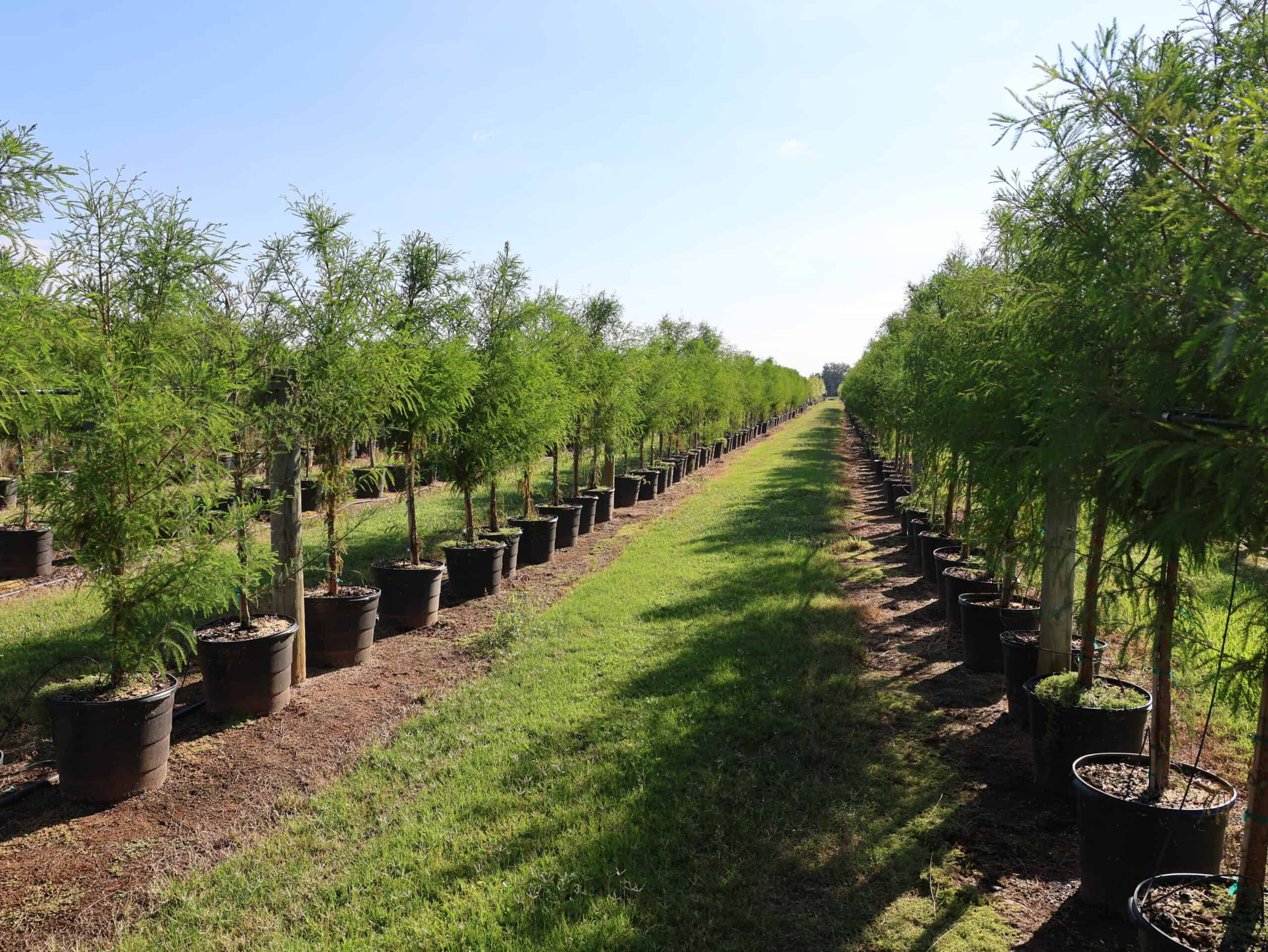
The vision for the $50.5 million, 100-acre project, which broke ground in March, is to plant the trees in a grid pattern resembling soldiers standing in formation.
As you might imagine, growing 3,000 trees with a firm delivery deadline isn’t easy, given the whims of Mother Nature.
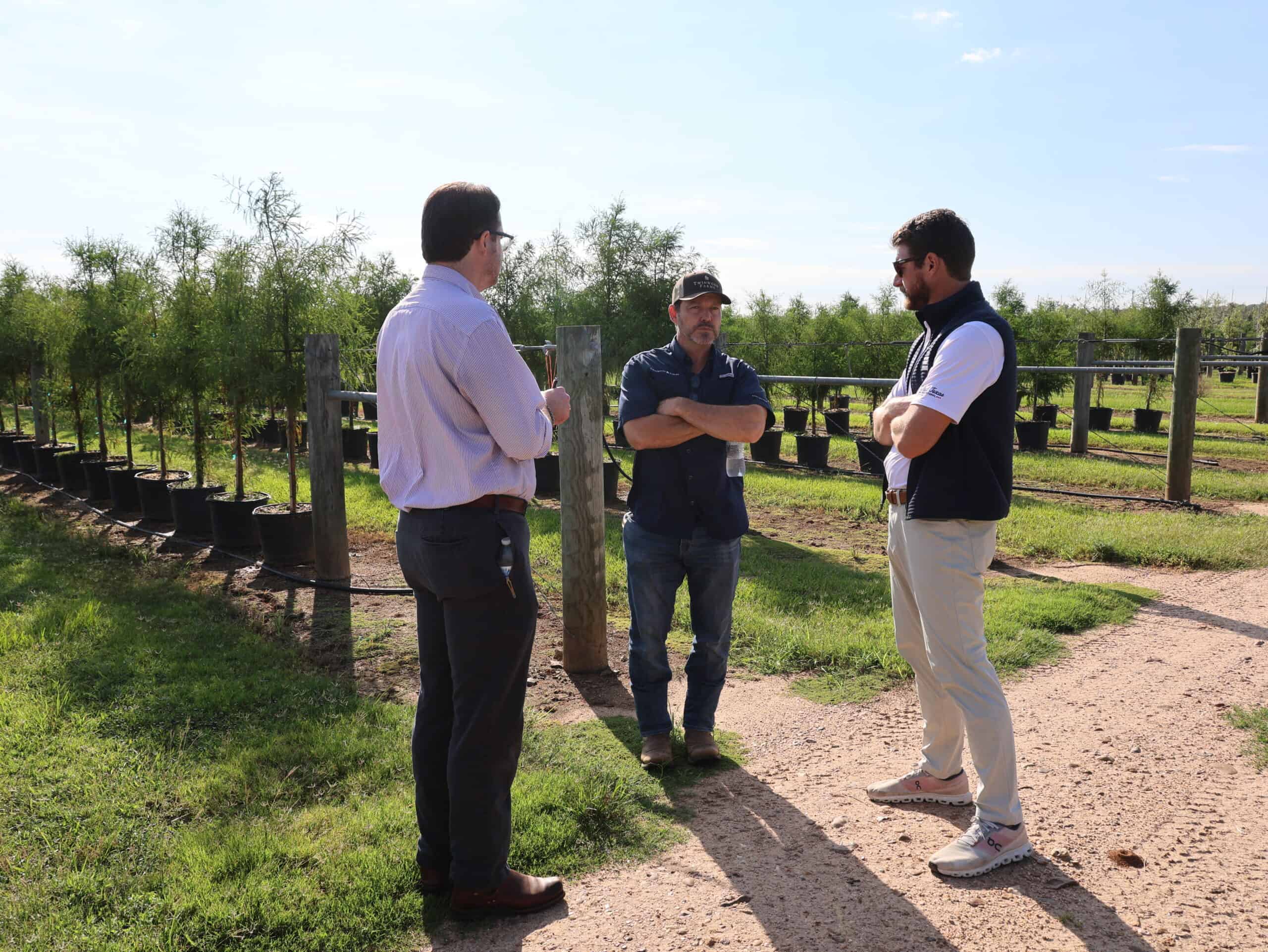
During a recent tour of the farm, Twinwood Farms President Jonathan Judice told the Houston Business Journal that the process of growing 6-inch cuttings into 10-foot, mature trees has been a learning experience — even with the training his team has gained from raising the more than 70,000 trees of all varieties that currently occupy the farm.
“One thing we didn’t expect was how fast the (LaNana cypress) trees would grow,” Judice said. “It’s been a good problem to have for this project because it means the grove will develop very quickly once the trees are in the ground. But it’s meant they outgrow their pots more quickly, so some of the first trees we grew are now too big for this particular project.”
When the initial idea for Memorial Groves was laid out by landscape architect Thomas Woltz of Charlottesville, Virginia-based Nelson Byrd Woltz, the renderings included loblolly pine trees. Woltz also has designed landscapes for the newly opened Ismaili Center along Allen Parkway and the Rothko Chapel campus expansion in Montrose.
Loblolly pines grow quickly, are native to the Southeast United States and are relatively easy to maintain. They’re also very tall and straight, perfect for a grove meant to have the feel of a military formation.
Between 1917 and 1919, the land where Memorial Park currently sits was occupied by Camp Logan, one of 32 temporary training centers where the nation’s doughboys underwent preparations for the brutal trench warfare already underway overseas. In all, some 70,000 troops trained at Camp Logan before being deployed to Europe.
Row after row of pine trees seemed like the perfect way to pay tribute to those soldiers.
However, Judice pushed the conservancy and Woltz to consider the bald cypress. That species grows very tall and, as a conifer, it would have a similar end appearance to a pine tree. But it also has the added benefit of being drought resistant.
“Not only is the bald cypress drought resistant, it is incredibly long lived,” Judice said. “If they are well maintained, they can live for 1,000 years. That’s far longer than most oak species and any pine species.”
But the bald cypress also has its own drawbacks. It is susceptible to needle blight, which is common in humid climates. And it’s roots can develop “knees,” or protrusions that aren’t ideal for a pedestrian-oriented installation.
What Judice, Woltz and Memorial Park Conservancy President and CEO Chris Ballard ultimately settled on was the LaNana cypress. It has all the benefits of a bald cypress but is blight resistant and does not grow knees.
The breed actually is a cross between the bald cypress and the Montezuma cypress, which are native to Texas and Mexico, respectively. The hybrid breed was then perfected in China as the heartiest trees in each crop were bred with one another.
The LaNana cypress was brought to the United States by professor David Creech of Stephen F. Austin University in 2001. Creech planted a number of trees along Lanana Creek in Nacogdoches and watched them flourish, thus giving the breed its name.
Judice said Houston is a perfect environment for LaNana cypress trees to grow, and he’s already seen them thrive here.
“There were some growers who were raising them before,” he said. “But we are now the biggest producer by far.”
Interestingly, every tree planted in the Memorial Groves installation will be a clone of a single tree, meaning they all grow at a similar rate.
Judice and his team take each cutting from a mature tree and plant it in a greenhouse. In just a matter of weeks, the cuttings take root and start looking like baby trees.
By 18 months, the trees are well over 6 feet tall. LaNana cypress trees are capable of growing up to 60 or 70 feet.
Because the Memorial Groves trees will be spaced 16 feet apart in each direction, their branches will start to touch within just a few years, creating a canopy visitors can walk under, Judice said.
“It’s funny because when you plant the cutting, it still thinks it’s a branch and tries to grow off to the side or sprout needles very close to the ground,” Judice said. “You almost have to train them to act like a tree by pruning them and staking them.”


The Memorial Groves project goes beyond the thousands of trees that will be planted next year.
When the project opens next November, visitors also can expect a straight, unobstructed path running through the center of the grove for three-quarters of a mile, which will allow visitors to reflect on the meaning of the trees.
Memorial Groves also will be home to a new visitor’s center, which will educate visitors about the park’s history, Camp Logan and World War I. The 6,300-square-foot building also will serve as the new headquarters for Memorial Park Conservancy, whose 70-employee staff currently is split between the Running Complex and the maintenance yard.
Another aspect of the Memorial Groves project is a new playground, which will be only the second in all of Memorial Park and the first delivered by the conservancy.
The playground also will pay homage to Memorial Park’s history as an Army training camp. The custom equipment designed by Earthscape includes oversized soldier helmets kids can climb on or into, Army crates and an enormous loaf of “hard bread” offering additional climbing opportunities — all of which will be inscribed with WWI insignia.
“When it’s complete, Memorial Groves will become one of the most unique destinations not only in Memorial Park, but in the nation,” Memorial Park Conservancy President and CEO Chris Ballard said. “This new representation highlights the historical significance of the park and offers Memorial Groves as a place to honor the past while connecting to the park’s future.”
About Memorial Park’s Ten-Year Plan
Memorial Groves is among a subset of accelerated projects of the Memorial Park Master Plan made possible by the Ten-Year Plan. The Ten-Year Plan enables the design and construction of significant components of the Memorial Park Master Plan and was made possible by a catalyst gift from Kinder Foundation and support from other generous donors. Together, these projects promote connectivity and resilience, restore damaged ecologies to provide higher function for the Park and city, help manage storm water, provide new cultural and recreational amenities, and tell the historical narratives of the people and the land through landscape design.
Memorial Park Conservancy is delivering the Ten-Year Plan projects with its project partners: Houston Parks and Recreation Department, Uptown Houston, and Kinder Foundation. Completed Ten-Year Plan projects include the Clay Family Eastern Glades (opened July 2020); the Sports Complex (opened October 2020); a one-mile segment of the Seymour Lieberman Trail that is now off of Memorial Drive and is an exciting run through the trees and over ravines (opened October 2022); the Kinder Land Bridge and Cyvia & Melvyn Wolff Prairie (opened February 2023); and the Running Complex (opened November 2023).
November 3, 2026
October 27, 2026
Visit the Memorial Park map to explore all the Park has to offer: trails, recreation facilities, historic sites, and more!
Visit the calendar to see our upcoming events and plan your next visit!